Storefront signage in Chicago: choosing the right sign for your building
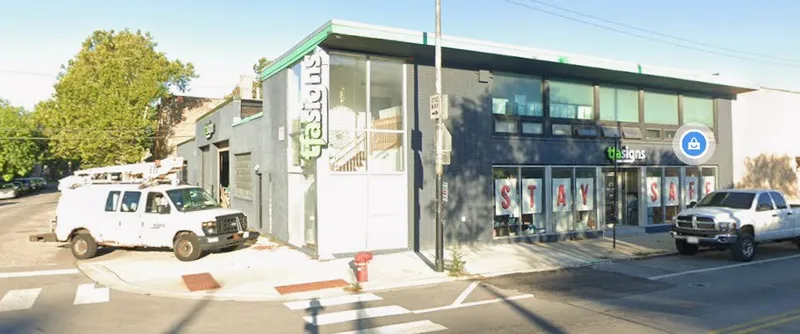
Compare storefront sign formats through visibility, facade conditions, lighting, mounting and project scope.
Begin with the building and the approach
A storefront sign needs to identify a business in the setting where customers encounter it. Start with the facade, entrance and the direction from which people approach. Share photographs that show the whole storefront rather than only a close view of the old sign. Explain what customers should recognize and where the sign needs to be seen.
TFA Signs makes custom storefront signage for Chicago businesses, including channel letters, blade signs, illuminated signs and window graphics. Selecting among those formats is not simply a question of choosing a favorite photograph. Each option uses the building differently. The most useful starting point is a clear description of the property, the name or logo and the intended mounting position.
Compare formats with a specific purpose
Channel letters provide individually fabricated letters for a business name or logo. A blade sign projects from the building to support identification from a different approach. Window graphics use the glass for lettering, branding or other information. A cabinet or lightbox presents a graphic face within an illuminated sign structure.
Ask what each format would do for your actual storefront. A proposal should explain the proposed size and position, not just show a general example. TFA's storefront sign service brings these choices together with design, fabrication, permit coordination and installation. Use that discussion to narrow the options before comparing detailed quotes.
Think about lighting as part of the design
Lighting affects the sign's appearance as well as the project scope. Discuss whether identification is needed after dark, what visual effect is intended and where electrical service is available. Front-lit and halo-lit channel letters offer different appearances. Illuminated cabinets present another format, while non-illuminated signs may be appropriate for a different brief.
Do not treat the word LED as a complete sign specification. LEDs can illuminate fixed letters or cabinet faces, while a programmable display is a separate product with changeable content. Tell the sign company whether the project needs a permanent brand mark or information that staff will update. This distinction helps avoid comparing products that serve different purposes.
Work with the facade rather than around it
The wall surface, mounting position and installation access are part of the sign design. Provide information about existing fixtures and signs, and ask what can be established through a site review. Artwork is important, but the method used to attach and service the sign also belongs in the conversation.
Landlord requirements or an established building sign program may shape the proposal. Share those documents early. If you are replacing an old sign, ask how removal and the existing mounting arrangement will be handled. Do not assume that an old installation settles the requirements for a new sign with different dimensions, illumination or attachment details.
Plan the window graphics separately
Window graphics can complement a storefront sign without serving exactly the same function. TFA offers vinyl lettering, printed graphics, perforated films and frosted treatments. Explain whether the purpose is branding, information or privacy, and discuss the balance between graphics and the view through the glass.
The window graphics page describes these options. When requesting a proposal, include window measurements and photographs, and explain which areas need to remain clear. Keep the window scope distinct from the main wall sign so the quote makes clear which surfaces, materials and installation tasks are included.
Include permits before scheduling installation
Chicago sign requirements depend on the location, size, mounting and illumination. Some projects involve additional electrical, public-way or landmark review. TFA Signs coordinates applicable permit documentation for an agreed project scope, while the City makes approval decisions. Discuss these responsibilities before treating a design proof as authorization to install.
The Chicago sign permit guide links to official resources and explains the different considerations. If the property is outside Chicago, identify the municipality responsible for that address. TFA's Chicago shop location does not determine which building department reviews a suburban project. Start with the actual property and confirm the applicable process.
Ask for a comparable written proposal
A useful quote connects the artwork to a defined product and installation. Ask for the sign type, dimensions, materials, lighting, mounting and included services to be described. Clarify responsibilities for property approval, permit coordination, electrical work, removal and access. A lower total may reflect a different scope rather than a comparable finished result.
For channel letters, TFA publishes a range of $1,500-$6,000 for a typical 10-15-letter storefront sign. Larger or more complex storefront projects run up to about $10,000, and channel letters start at $75 per letter. These are published ranges, not a quote for every building or sign format. Your project still needs an itemized proposal.
Bring the decision back to the storefront
Review the proposed sign in relation to the entrance, neighboring building features and intended approach. Keep the selected artwork, dimensions and project responsibilities together so that the same scope guides fabrication and installation. Ask questions before approval if a rendering and the written proposal appear to describe different products.
To begin, send TFA Signs the business name, artwork, address, photographs and any landlord criteria. Explore channel letters and blade signs as possible formats, then request a quote for the option that fits the building. The aim is a clearly specified storefront sign, not a design chosen without regard to its setting.